חזרה לדף הבית
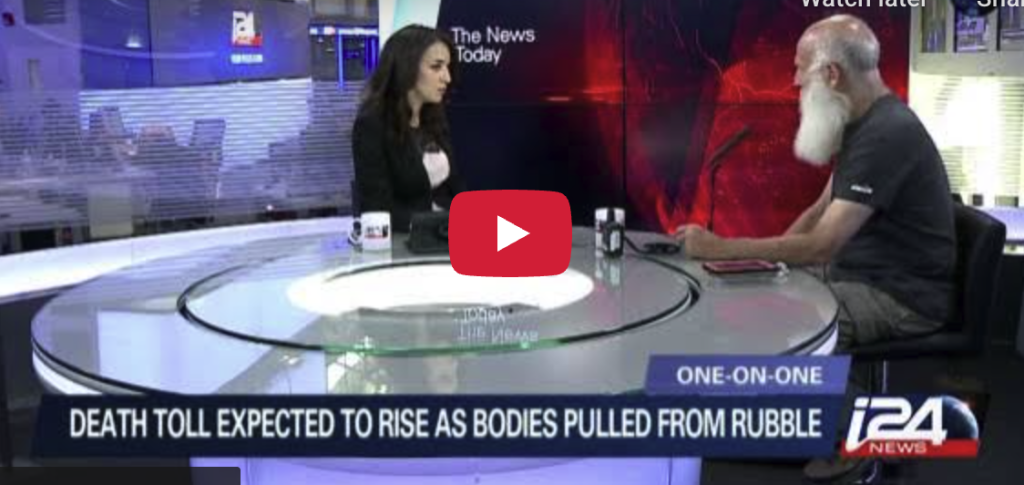
In the aftermath of the devastating earthquake in Nepal, the world was once again confronted with the harsh realities of large-scale rescue operations in some of the most challenging terrain on earth. In an interview on i24NEWS, Hilik Magnus, founder and chairman of Magnus Search and Rescue, explained the immense operational, human, and logistical challenges that define rescue efforts in such extreme conditions.
i24NEWS is an international 24-hour news and current affairs television channel based in Jaffa Port, broadcasting globally and covering major events as they unfold. Against this backdrop, the interview provided rare professional insight into what truly happens behind the scenes of earthquake rescue missions.
According to Magnus, earthquakes in regions like Nepal create a perfect storm for rescue teams. The combination of mountainous terrain, unstable infrastructure, dense population areas, and limited access routes dramatically complicates every stage of the operation. Roads collapse, communication networks fail, and entire communities can become isolated within minutes. In such scenarios, time becomes both the most critical and the most unforgiving factor.
Magnus emphasized that rescue efforts following a major quake are not defined by dramatic moments alone, but by continuous decision-making under uncertainty. Teams must assess structural stability, aftershock risks, weather conditions, and the physical and psychological state of survivors, often with incomplete information. Every movement carries risk, not only for those trapped but also for rescuers themselves.
One of the central challenges highlighted in the interview was the difficulty of locating survivors beneath collapsed structures. In earthquake zones, especially in older or non-reinforced buildings, voids may form unpredictably. Identifying where people might still be alive requires experience, pattern recognition, and disciplined analysis rather than instinct alone. Magnus noted that advanced technology can assist, but it never replaces professional judgment developed over decades of fieldwork.
Another major obstacle is coordination. In international disasters, multiple rescue teams, aid organizations, and local authorities operate simultaneously. Without clear command structures and information flow, valuable time can be lost. Magnus explained that effective rescue operations depend on structured management, prioritization, and constant reassessment of strategy as conditions change.
Beyond the physical challenges, the interview also addressed the human dimension of disaster response. Survivors may be injured, disoriented, dehydrated, or suffering from shock. Rescue teams must work not only to extract people safely but also to stabilize them mentally and emotionally in environments marked by fear, loss, and chaos. Clear communication and calm leadership can be as life-saving as any technical tool.
Magnus stressed that experience is the defining factor in such missions. Earthquake rescue is not a scenario where improvisation can replace preparation. Understanding how structures collapse, how people behave under extreme stress, and how environments evolve in the hours and days after a quake is knowledge acquired only through years of real-world operations.
The Nepal earthquake once again demonstrated that large-scale rescue efforts are far more complex than they appear to the public. They demand patience, restraint, and difficult choices, often made under intense pressure and global scrutiny. As Magnus explained, the most dangerous mistake in disaster response is acting too fast without a full understanding of the risks.
The interview on i24NEWS highlighted the critical importance of professional rescue leadership in global disasters. It served as a reminder that saving lives in extreme conditions is not about heroics, but about experience, discipline, and the ability to make the right decision when every option carries consequences.
Magnus Search and Rescue continues to operate worldwide with this philosophy at its core, bringing decades of expertise to some of the most complex rescue scenarios on the planet, where preparation and judgment are the difference between life and death.